About
The professional story behind the work — from telecommunications infrastructure to modern AI agent systems.
The Engineering Career
My engineering career began at Siemens in Colombia, where I spent eight years working across GSM and UMTS network deployments before reaching a TAC-3 role in the Microwave (MW) Care Support unit — providing specialized technical assistance to carrier clients on critical transport infrastructure. During that period, I was also designated as an official Siemens Technology Instructor and received advanced training in Network Management Systems Administration at Siemens headquarters in Munich, Germany.
That combination of deep field expertise and a mandate to train others shaped everything that followed. I founded Telsco SAS in 2005, which over seventeen years grew into the primary service partner for Nokia, Siemens, Telefónica, and Alcatel across Colombia. Through Telsco I served Nokia as a specialist contractor — delivering Care Services, Maintenance, Installation, Commissioning, and Training programs across Latin America.
The transition toward AI and automation was a natural evolution of the same engineering instinct: find the workflow, understand the constraints, and build a system that does the work better than the manual process. What changed was the tooling — large language models, visual workflow orchestration platforms, and real-time messaging APIs opened up categories of automation that were previously impractical or cost-prohibitive.
The Shift to AI & Automation
The Sophia project at Mississauga Hyundai was the proving ground. With no dedicated engineering team and no existing automation infrastructure, I designed and deployed a production AI agent system that handles multilingual lead qualification and appointment scheduling over WhatsApp Business — operating continuously without human intervention for routine interactions, in 30+ languages, integrating nine external services.
What that project demonstrated is that the same engineering principles that govern large telecommunications deployments — modularity, clear interfaces, error handling, observability, graceful degradation — apply directly to AI agent architecture. An LLM orchestration pipeline is not fundamentally different from a multi-vendor network integration: both require clear contracts between components, defined failure modes, and a system design that does not break silently.
This is the lens I bring to every AI and automation engagement: not “what does this technology make possible?” but “what operational problem needs to be solved, what measurable outcome defines success, and how do we build something that will keep working reliably after the initial deployment?”
Technical Instruction & Public Content
The ability to explain complex technical systems clearly — to audiences ranging from carrier engineers to dealership managers — has been a consistent thread throughout my career. At Siemens, I delivered over 1,000 hours of advanced technical training to corporate clients across Latin America. That work built a discipline of translating engineering concepts into language that non-specialists could act on.
152,000+ Views
Aggregate views across engineering content on YouTube — including a 2017 neural networks explainer series and Telsco's RF fundamentals channel (50k+ views on the most-watched RF Power episode).
1,000+ Training Hours
Advanced technical training delivered internationally at Siemens — covering GSM/UMTS architecture, MW transport systems, ONMS administration, and base station operations.
Core Philosophy
Every system should be buildable, testable, and understandable by another engineer. No black boxes. No magic. Just well-designed components with clear responsibilities.
AI is valuable when it reliably solves real problems in production — not when it demonstrates impressive demos. The measure is operational impact, not technical novelty.
Automation investments should produce quantifiable outcomes: hours saved, leads processed faster, conversion rates improved, costs reduced. If it cannot be measured, it cannot be managed.
Systems must keep working. Resilience, graceful degradation, and observability are not optional. The best automation is the kind that runs quietly in the background without requiring constant maintenance.
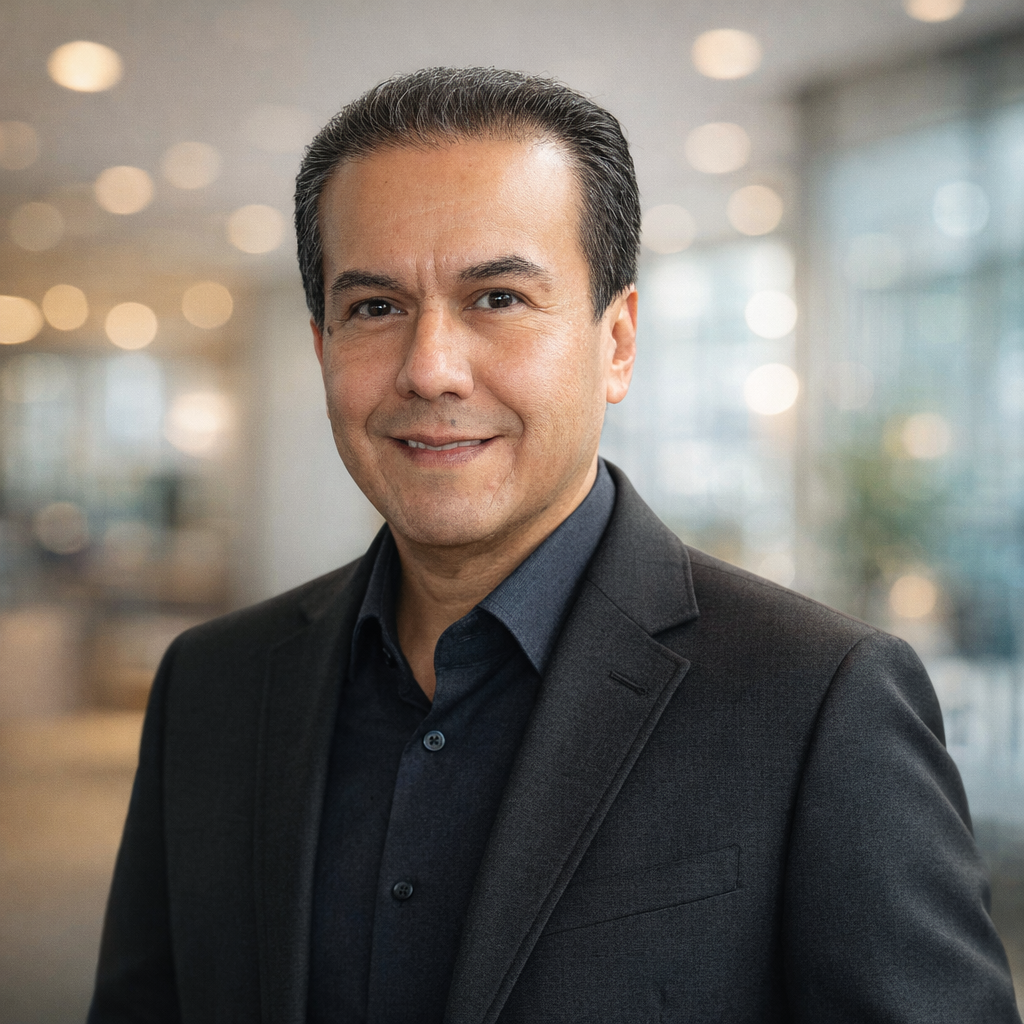
Electronic Engineering Studies
Universidad, Bogotá, Colombia
Engineering foundation complemented by 25+ years of senior-level professional experience and industry certifications at Siemens and Nokia.
Industry Certifications
- Siemens ONMS on Unix OS (Munich, Germany)
- Nokia & Siemens hardware and protocols
- Telecom infrastructure specialist certifications
- AI agent design and deployment
- LLM orchestration patterns
- Multi-model AI systems
- Enterprise API integration
- Workflow automation engineering